A planning framework for expo gates in Delhi-NCR: lane arithmetic, five gate service levels to hold yourself to and how to use a live entry-rate view to crew a big expo.
Why expo gates are a different problem from concert gates
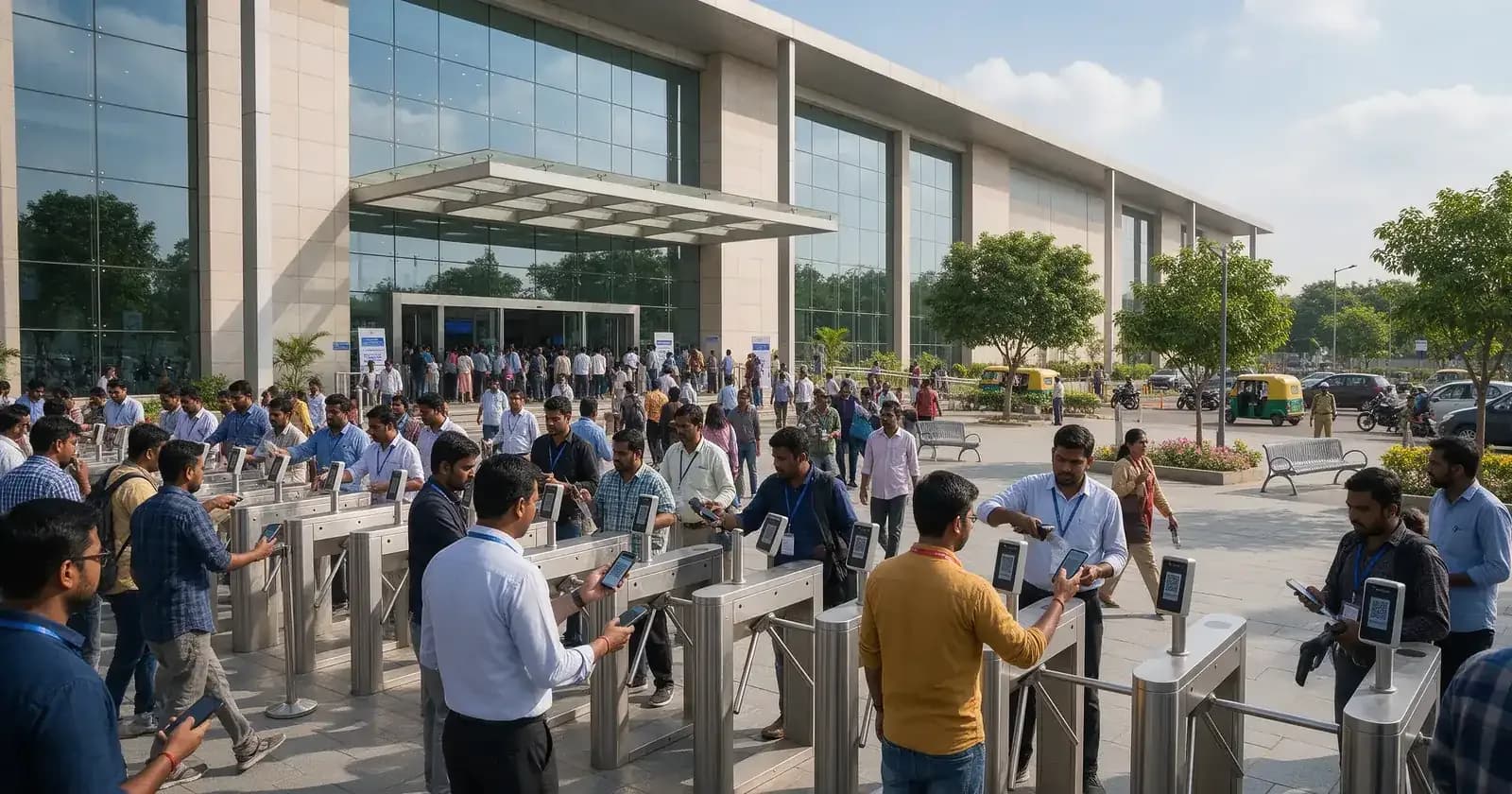
A concert crowd arrives against a hard deadline: doors at 6 pm, headliner at 9 pm, and most people turn up in a rolling wave over two or three hours. An expo or trade fair behaves differently. Visitors arrive from the moment the gates open, many of them in organised groups, and a large share are repeat visitors with passes, badges or pre-registered QR codes. The first two hours of a weekend day can carry a disproportionate share of the whole day's footfall, and that is the window that decides whether your gates feel organised or chaotic.
This article is a planning framework, not a report of measured results. The numbers below are illustrative targets and worked arithmetic that you should replace with your own venue's figures. The "11 minutes" in the title is the goal we use to size everything else: a visitor who joins the queue at the busiest moment should be inside within about 11 minutes.
Start with arrival arithmetic, not with equipment
Before you decide how many scanners to buy or hire, estimate how many people will arrive in your worst 90 minutes.
Say an expo expects 25,000 visitors on its busiest day, and your past data (or a comparable show's) suggests that 40 percent of them arrive in the first 90 minutes after opening. That is 10,000 people in 90 minutes, or about 6,667 an hour.
Now look at a single lane. If an average scan takes 8 seconds, the ceiling is 3,600 divided by 8, which is 450 visitors an hour. Real lanes never run at the ceiling, because people fumble for phones, a screen is dim, a bag needs opening, someone asks a question. A planning figure of 400 an hour per lane is a reasonable rule of thumb to test against your own pilot.
•Lanes needed to match arrivals: 6,667 divided by 400 is about 16.7, so plan 17 lanes.
•If you only open 12 lanes: capacity is 12 times 400, which is 4,800 an hour. Arrivals exceed capacity by 1,867 an hour. Over 90 minutes that builds a queue of about 2,800 people, and the last person in it waits roughly 2,800 divided by 4,800 hours, which is about 35 minutes.
•If you open 14 lanes: capacity is 5,600 an hour, the shortfall is 1,067 an hour, the queue reaches about 1,600 people, and the last person waits about 17 minutes.
•At 17 lanes the queue barely forms.
The lesson is that a small change in lane count moves the wait enormously near the peak. This is why the 11-minute target is a lane-planning target first and a technology target second.
The five gate SLAs
We hold gates to five service levels. Treat them as a starting point and adjust per venue.
1.Average scan time per visitor under 8 seconds. This is the time from the scanner being pointed at the code to the green or red result.
2.Throughput above 400 visitors an hour per scanner lane during the peak window, measured over a full 15-minute slice, not a lucky five minutes.
3.Offline sync lag under 30 seconds after reconnecting. If the network drops and returns, scans recorded in the meantime should reach the central record quickly so that a ticket scanned at Gate 2 is not accepted again at Gate 5.
4.Duplicate scan detection in under 2 seconds. A ticket that has already entered should be flagged at the lane, not discovered in a report the next day.
5.Entry-rate dashboard refresh under 60 seconds. The person managing the gates needs a current view of entries per lane and per gate.
An SLA is only useful if somebody owns it. Write each one on the gate-lead briefing sheet with the name of the person who watches it.
Pre-load the roster so a weak network cannot stop you
Mobile networks near big venues can slow down exactly when you need them. The safe design is to make the scanner independent of the network for the most common action, which is validating a ticket.
•Download the list of valid tickets to each scanner device before gates open, ideally the evening before and again an hour before opening to catch late sales.
•Store a hash or token for each ticket rather than readable personal data. A lost scanner should not expose a list of names and phone numbers.
•Let the device record scans locally and push them to the central system whenever a connection exists.
•Decide in advance what a scanner does if it has never synced: refuse entry, or accept with a manual check. Make that rule explicit for the gate crew.
•Carry spare devices with the roster loaded, plus power banks.
If you use ticketprix for ticketing, tickets carry QR codes and the publisher has a volunteers section for gate staff. Confirm how scanning works, including offline behaviour and device requirements, with the ticketprix team before show day rather than assuming it; whatever tool you use, test it in the actual venue.
Run lanes dynamically
Fixed crews at fixed lanes waste capacity. The same three people can serve a surge if they move to where the queue is.
•Put one lead on a radio who watches the entry-rate view and the physical queues.
•Set a trigger. For example, if a lane falls below 300 an hour for ten minutes while a neighbouring lane runs above 400, move a person across and find out why. The cause is often a worn screen protector, a glare problem, or a crew member who needs a break.
Separate the flows that behave differently
Mixing audiences slows everyone, because each flow has different checks and different exceptions.
•General admission, VIP or delegate, exhibitor and media are four different flows. Give them separate lanes, ideally at different ends of the entry area so the queues do not tangle.
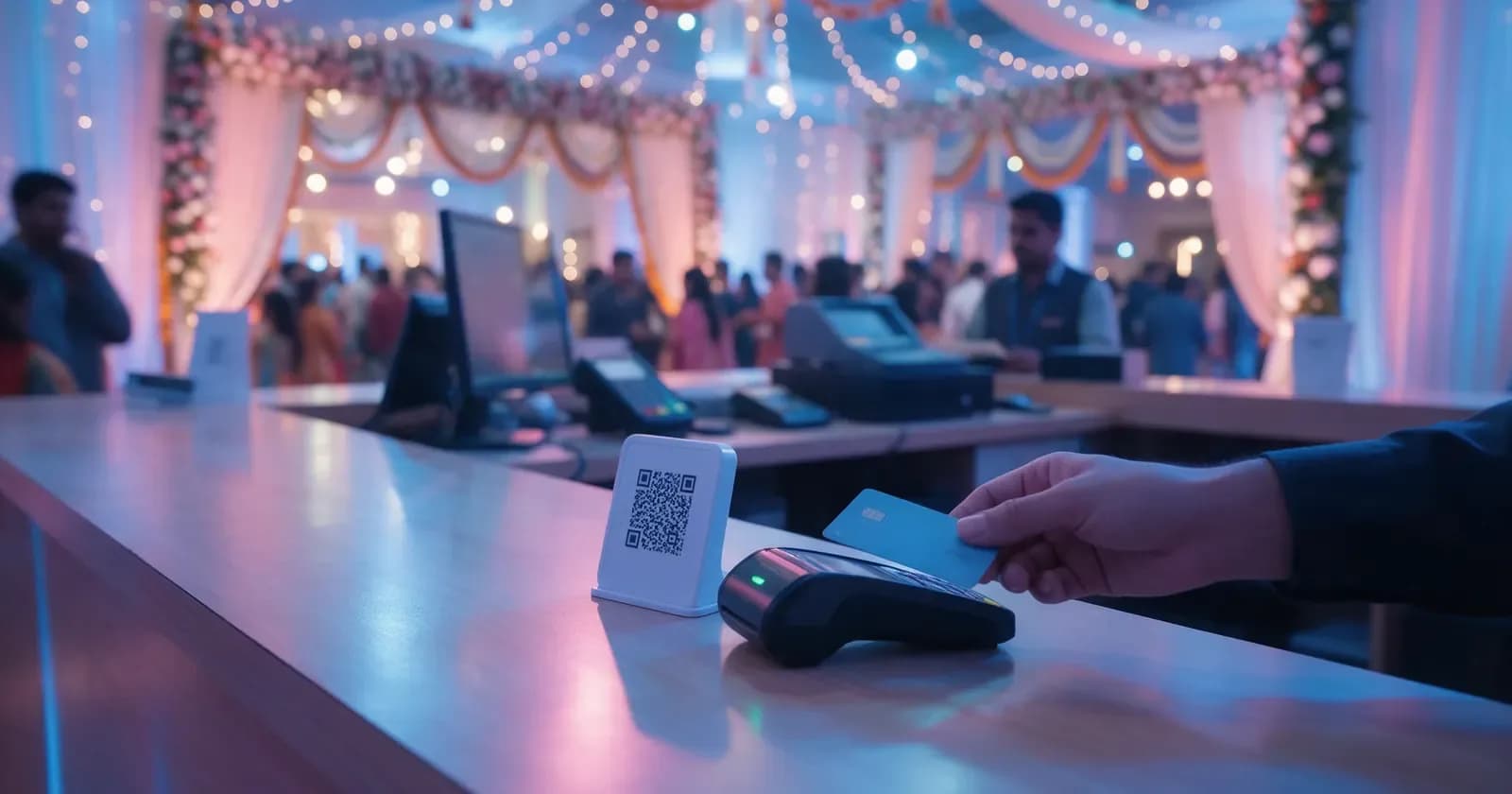
•Pre-registered visitors versus on-the-spot sales. On-the-spot purchases are slow because they involve payment. Give them their own counters and signage so they do not sit inside the scan lanes.
•Security screening often decides your real throughput. Align the number of ticket-check lanes with the number of screening lanes, otherwise you simply move the queue from one point to another. Coordinate with the venue and security agency early; their rules on bags and screening are theirs to set.
Wrap-up: what to do this week
Use this as a checklist for your next expo.
•Estimate peak-90-minute arrivals from past editions or a comparable show, and write down the assumption.
•Divide by a tested per-lane rate to get your lane count, then add a few spare lanes for failures.
•Pilot one lane with real tickets and measure scan time and hourly rate.
•Load the roster to every scanner the evening before and an hour before opening.
•Separate GA, VIP, exhibitor and on-the-spot flows physically.
•Agree the lane-shift trigger and the radio plan with your gate leads.
•Brief the crew on the five SLAs and on who owns each one.
•Confirm security screening capacity and rules with the venue.
•Review the numbers after the event and update your planning rate.