

WhatsApp marketing for Tamil, Telugu, Kannada & Hindi audiences
Opt-in, frequency caps and regional language tests across four scripts: a consent-first playbook for WhatsApp Business.
Why WhatsApp works for events, and why it can go wrong fast
In India, WhatsApp is the app most of your buyers already open every day. A message about a show, delivered to someone who asked for it, is read far more often than an email. That is exactly why it is easy to abuse: send too much, in the wrong language, to people who never agreed, and you will lose the audience and risk your WhatsApp Business number.
This playbook covers the five parts that decide whether WhatsApp pays off for an event: consent, message design, language, frequency and measurement. The language section is written for Tamil, Telugu, Kannada and Hindi audiences, but every language point is a hypothesis to test with your own list, not a fixed fact about any community.
Start with consent, because everything else depends on it
WhatsApp's business policies require that people have opted in before you message them, and the Digital Personal Data Protection Act, 2023 puts consent and purpose-limitation obligations on how you use personal data. Confirm current requirements with a lawyer; this article is not legal advice.
A clean opt-in has four properties:
Good places to collect opt-in for an event: the checkout page after a ticket purchase, a "notify me when tickets open" form, a QR code at a previous edition, and a click-to-WhatsApp ad where the person starts the conversation themselves.
Never upload a bought or scraped list. Beyond the policy risk, those lists have poor accuracy and generate reports of spam, which lower your number's quality rating.
Two kinds of message: transactional and marketing
Meta classifies business messages into categories, and they are priced and governed differently. At a high level:
Check Meta's current pricing and category rules before budgeting, as both change. Do not try to sneak a promotion into a utility template; templates are reviewed and can be rejected or recategorised.
Designing a message people actually read
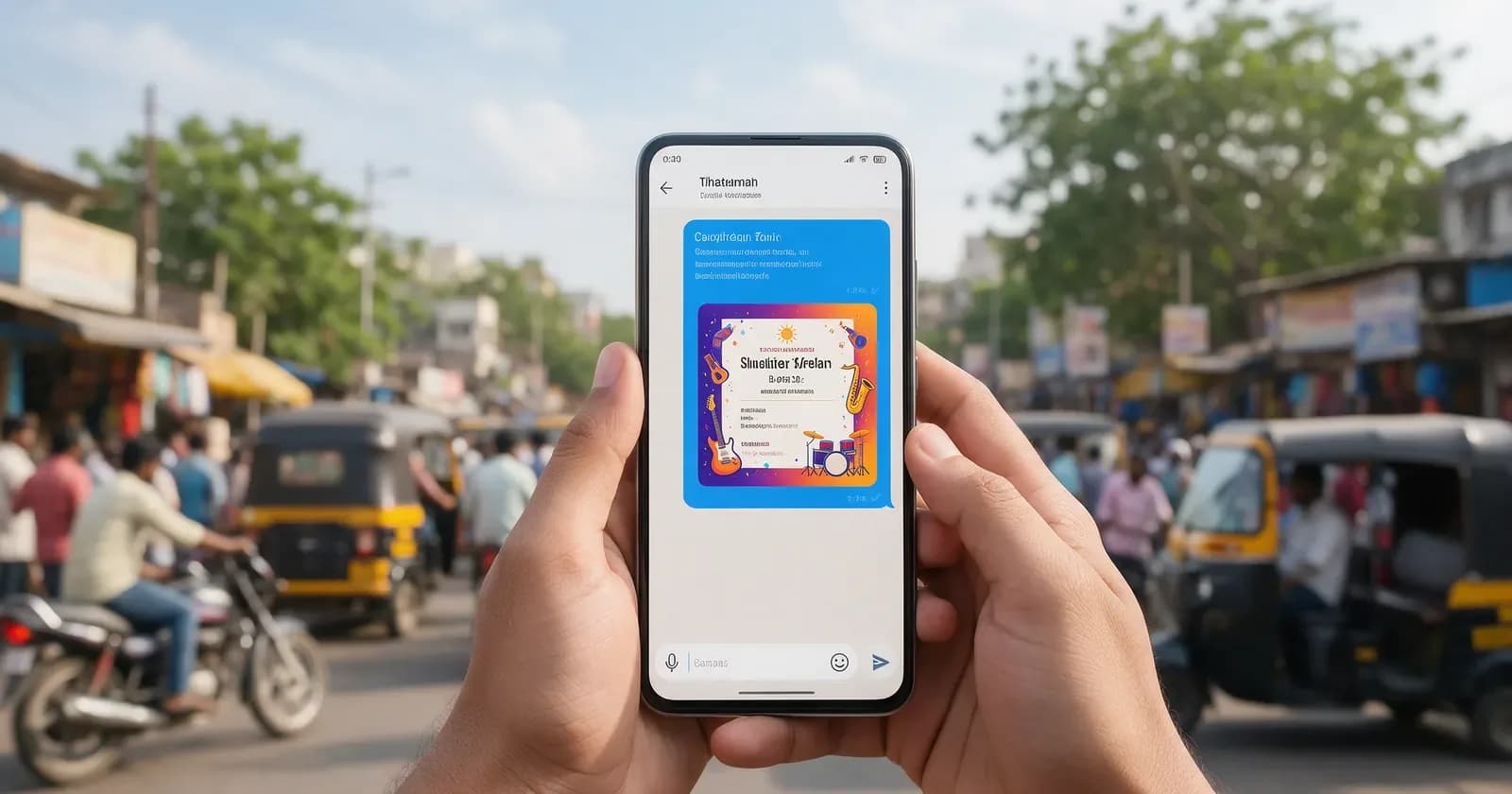
Marketing templates are short. A structure that works well:
Keep the opening within the preview text, since that is what the person sees before opening. Avoid ALL CAPS and stacks of emoji; they read as spam. Use specifics (venue, date, door time, price tier) instead of adjectives.
If your organisation sells on ticketprix, note that the platform lets Pro and Max organisers connect their own WhatsApp Business account and use their own templates, while Free organisers use the platform's templates. Check your plan before planning campaigns.
Language: test, do not assume
Your list probably contains people who read more than one language. The question is not "which language does Chennai prefer" but "which language does this person prefer", and the best evidence is what they chose or did.
Practical steps for Tamil, Telugu, Kannada and Hindi:
Run this as a clean split test: same offer, same time, two languages, random assignment within people who have not stated a preference. Measure click rate and tickets sold per 1,000 messages, not just opens.
Frequency caps and timing
More messages do not mean more sales. Every message is a chance for someone to block you, and blocks and reports reduce your number's quality rating and can limit your sending.
A starting framework, which you should tune:
For example, take a list of 10,000 opted-in numbers and two sends a week for four weeks, which is 80,000 messages. If the click rate is 4 per cent you get 3,200 clicks. If 5 per cent of clickers buy, that is 160 tickets. With a per-message price of ₹0.80 (illustrative only; check the current Meta rate card), that costs ₹64,000 for 160 tickets, or ₹400 per ticket. Now suppose you halve the sends to 40,000 by dropping non-responders and lose only 40 per cent of the clicks (3,200 times 0.6 = 1,920). Buyers fall to 96, but the cost drops to ₹32,000, or about ₹333 per ticket. This is why caps and suppression usually improve efficiency, not hurt it. Replace every number here with your own.
Measuring: what to track
Compare channels honestly. WhatsApp reaches people who already know you, so its return will usually look better than cold paid ads; that is expected and is not a reason to over-message the same people.